
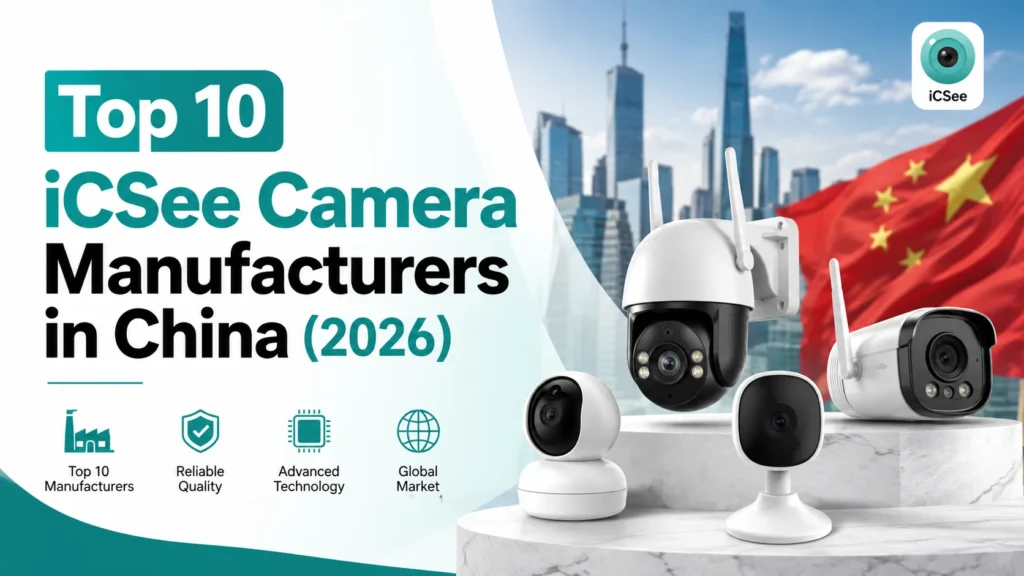


You searched “iCSee camera” and now you’re staring at a dozen near-identical listings, all claiming to be the real supplier behind the app. Some are factories. Some are resellers buying from a factory and slapping their own label on the box. A few might not even manufacture anything — just white-label someone else’s camera and call it a day.
That’s the problem with sourcing an iCSee camera manufacturer: the app is used by dozens of brands, but only a handful actually design and build the hardware. By the end of this guide, you’ll know which companies genuinely manufacture their own iCSee-compatible cameras, what separates a real factory from a repackaged product, and which questions to ask before you place an order.
What Makes a Company an iCSee Camera Manufacturer, Not Just a Reseller?
An iCSee camera manufacturer designs, produces, and often customizes the physical hardware that runs on the iCSee app — as opposed to a trading company that buys finished units and resells them under a different name. This distinction matters more than most buyers realize.
A true manufacturer controls production, so they can adjust firmware, add a private label, or change packaging on request. A reseller usually can’t, because they don’t own the production line. If you ask a supplier about minimum order quantity for custom logo printing and they hesitate or pass the question along to “their team,” that’s often a sign you’re talking to a middleman, not the factory floor.
Top 10 iCSee Camera Manufacturers in China
Here’s a list of Shenzhen-based manufacturers with a presence on Alibaba International, commonly associated with iCSee-compatible security cameras.
| iCSee camera Manufacturer | Est. | Product Focus | Typical MOQ* | Notable For |
|---|---|---|---|---|
| Shenzhen Kadymay Technology Co., Ltd. | 2007 | CCTV, IP, POE & solar 4G WiFi cameras, NVR/DVR | Varies by product | CE/FCC/RoHS/ISO9001 certified; 300+ staff, 5,000㎡ facility |
| Sunivision Technology Development Co., Ltd. | Not disclosed (16+ yrs) | ICSEE-branded WiFi, solar, PTZ & bulb cameras, NVR | As low as 1 piece | #7 leading factory for Surveillance Products; 13 patents |
| JER Technology Company | 2008 | IP cameras, NVR/DVR, PTZ, wireless, solar & 4G | Not publicly listed | 45,000 units/month capacity; exports to 50+ countries |
| Shenzhen Ruitewei Technology Co., Ltd. | 2001 | CCTV, solar cameras, NVR kits, WiFi cameras, solar lights | As low as 1 piece | #1 most popular in Network Camera on Alibaba |
| Shenzhen Anboqi Technology Co., Ltd. | 2007 | WiFi, solar, PTZ, bulb & dome cameras, NVR/DVR | Varies by product | In-house assembly, 100K+ units/month capacity |
| Shenzhen Black Eagle Weishi Electronic Technology Co., Ltd. | 2009 | Surveillance & hybrid binocular zoom cameras | Not publicly listed | 60+ patents; several FCC-certified models |
| Shenzhen Tris Vision Technology Co., Ltd. | 2010 | WiFi cameras, NVR kits, baby monitors, pet cameras | Higher (large OEM/ODM) | 20,000㎡ facility; Tuya Crown partner; 2M+ units/yr exported |
| Shenzhen Esyn Union Technology Co., Ltd. | Not disclosed | Solar & WiFi cameras (“Ubox” line) | As low as 2 pieces | Niche solar/4G specialist, smaller export volume |
| Shenzhen Haowei Communication Co., Ltd. | Not disclosed | CCTV, WiFi/4G, IP & solar cameras, NVR | As low as 1 piece | Fast ~5–7 day sample turnaround; weatherproof focus |
| Shenzhen Weisitai Technology Co., Ltd. | Not disclosed | ICSEE-branded WiFi, PTZ & solar cameras | As low as 1 box | SGS onsite-verified; sells cameras under the ICSEE name directly |
*MOQ and pricing figures are pulled from public marketplace listings and change often — always confirm current numbers directly with the supplier before quoting a customer.
Most are registered in Shenzhen (with Sunivision based in nearby Guangzhou), which isn’t surprising once you understand why the Greater Bay Area dominates this industry — more on that below. Since verified performance data for each factory isn’t public in one place, the smartest move before ordering is still the verification checklist in the next section, no matter which name you’re leaning toward.
1. Shenzhen Kadymay Technology Co., Ltd.
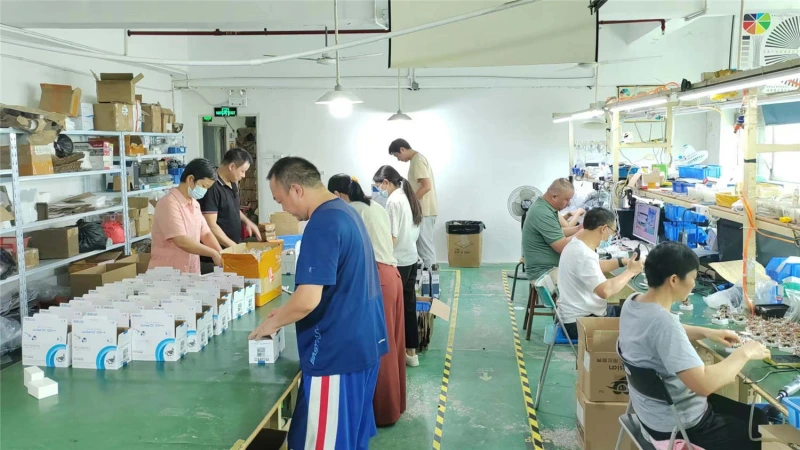
Founded in 2007 in the Bantian area of Longgang District, Kadymay describes itself as a high-tech enterprise covering R&D, production, marketing, and service for CCTV cameras, IP cameras, solar 4G WiFi cameras, POE camera systems, and NVR/DVR add-ons. It holds CE, FCC, RoHS, and ISO9001 certification, and reports a factory covering roughly 5,000 square meters with 300+ staff.
- Pros: Nearly two decades in the security-camera space, full CE/FCC/RoHS/ISO9001 documentation, and a catalog that covers both cameras and recorders (NVR/DVR) under one roof.
- Cons: Reported facility size and headcount are mid-sized rather than large-scale, so very high-volume orders may need a longer lead-time conversation upfront.
What buyers should know: Kadymay explicitly offers both ODM (off-the-shelf, relabeled) and OEM/licensed projects, so it’s worth clarifying upfront which path you want — the certification and lead-time story can differ between the two. Ask for the current ISO9001 and CE/FCC certificates directly, since these are renewed periodically.
2. Sunivision Technology Development Co., Ltd.
Sunivision is based in Guangzhou rather than Shenzhen, with more than 16 years in the surveillance business. Alibaba ranks it among the top factories in its category, and its own listings already carry the ICSEE app name directly on solar, WiFi, PTZ, and bulb-style cameras — a strong signal of tested compatibility rather than aftermarket firmware.
- Pros: Reported ≤4-hour response time and ≥76% on-time delivery rate; 13 patents and roughly 500 cooperating suppliers suggest a mature supply chain; MOQs as low as 1 piece make sampling easy.
- Cons: Being outside Shenzhen proper means slightly different logistics for factory visits if you’re touring multiple Shenzhen-based suppliers on the same trip.
What buyers should know: Sunivision’s own product listings name ICSEE as a supported app directly (alongside Tuya on some models), so this is a reasonable first call if confirmed iCSee compatibility matters most. Its main export markets skew toward Southeast Asia, Southern Europe, and Latin America, so ask about experience in your specific target region.
3. JER Technology Company
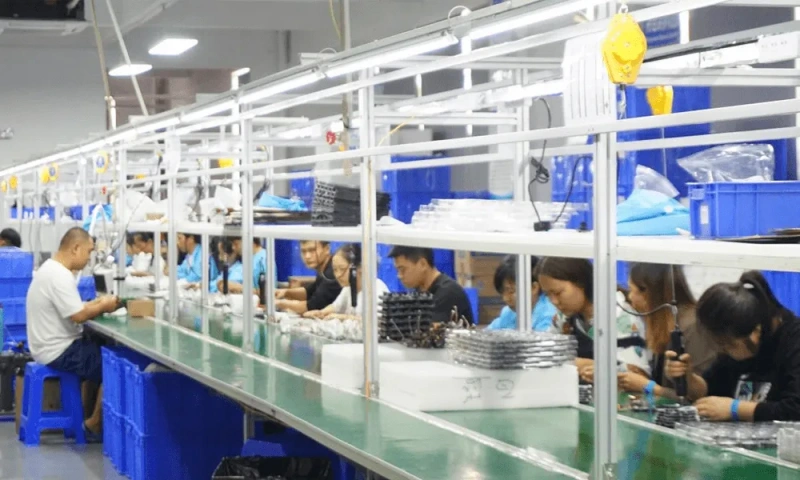
Established in 2008, JER Technology runs its own production facility with a stated monthly capacity of around 45,000 units and a team of about 60 staff. Its catalog spans IP cameras, NVR/DVR, PTZ, wireless, solar, and 4G camera systems, all reported as CE, FCC, and RoHS certified, with exports to more than 50 countries.
- Pros: One-stop catalog spanning cameras and recorders; consistent CE/FCC/RoHS certification messaging across its product lines; long export track record across 50+ countries.
- Cons: A 60-person, 45,000-unit-a-month operation is solid but mid-sized — during peak season, confirm current capacity against your target volume before committing to a delivery date.
What buyers should know: JER Technology publishes buyer-facing guides comparing Chinese camera manufacturers, which suggests a company used to fielding sourcing questions from overseas buyers — a good sign for communication, but still verify certifications and MOQ per SKU rather than per catalog.
4. Shenzhen Ruitewei Technology Co., Ltd.
Ruitewei traces its founding to 2001, starting as a small R&D team before growing into a dedicated CCTV, solar camera, NVR kit, WiFi camera, and solar-light manufacturer. It currently ranks as the #1 most popular supplier in Alibaba’s Network Camera category, with on-site material inspection and in-house testing instruments.
- Pros: Over two decades of operating history; top ranking in its Alibaba product category; on-site material inspection and testing instruments suggest a more structured QC process than smaller peers.
- Cons: Some third-party directory listings cite very large production figures (10,000+ staff, 100,000㎡ facility, 1 million units/day) for this company — figures that large should be independently verified rather than taken at face value, since such claims are sometimes templated across multiple supplier profiles on the same directory site.
What buyers should know: Given the mixed scale claims across sources, ask Ruitewei directly for its actual factory headcount, floor space, and daily output, and request a live video tour to confirm what you’re told matches what you see. Its solar-light product line also suggests broader outdoor-lighting manufacturing experience beyond cameras alone.
5. Shenzhen Anboqi Technology Co., Ltd.
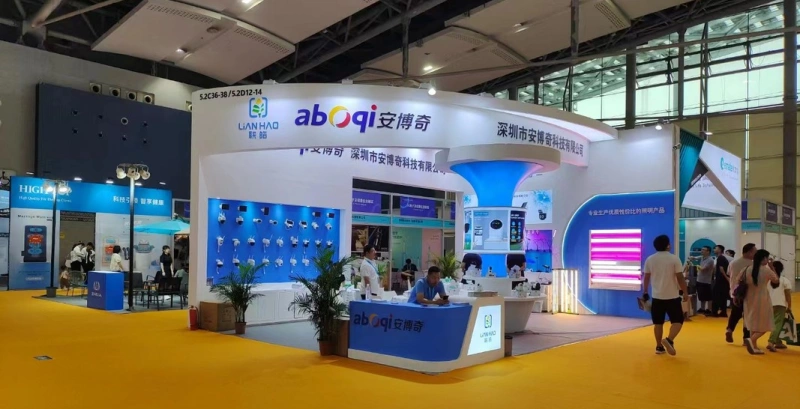
Founded in 2007 in Shangxue Technology Park, Bantian, Longgang District, Anboqi is one of the longer-established names on this list. It runs three in-house assembly lines with a stated output capacity above 100,000 units a month, and its catalog already includes iCSee-branded PTZ, solar, and smart-bulb cameras alongside NVR/DVR systems.
- Pros: Nearly two decades in operation, in-house assembly (less reliance on subcontractors), and a broad range spanning WiFi, solar, and smart-bulb cameras.
- Cons: Buyer response rate on trade platforms runs around 60%, a step below top-tier suppliers — confirm responsiveness before committing to a large order.
What buyers should know: Because production is in-house, Anboqi is a reasonable candidate for private-label and logo customization. MOQ and sample lead time vary by product line — solar cameras generally carry higher tooling costs than fixed WiFi models, so ask for a quote per SKU rather than assuming one flat MOQ across the catalog.
6. Shenzhen Black Eagle Weishi Electronic Technology Co., Ltd.
Established in 2009 in Shenzhen’s Guangming District, Black Eagle Weishi has filed more than 60 patents and holds FCC certifications for several camera models, including hybrid binocular zoom cameras — a more specialized build than the basic fixed-lens units many competitors focus on.
- Pros: Heavier R&D and patent footprint suggests more engineering capability for custom optical or zoom features; multiple FCC-registered models shorten the compliance runway for the US market.
- Cons: Public data on production scale, staff count, and standard MOQ is thinner than for some peers — request factory capacity figures directly rather than relying on marketplace listings.
What buyers should know: If you need dual-lens or zoom camera variants rather than standard fixed-lens units, this iCSee camera manufacturer’s patent portfolio points to more mature R&D. Always verify the FCC/CE documents for the exact model you’re ordering, not just the company’s certifications in general.
7. Shenzhen Tris Vision Technology Co., Ltd.
Founded in 2010 (rebranded from an earlier name in 2013), Tris Vision is arguably the largest, most established company on this list. It operates a 20,000-square-meter manufacturing base in Longhua District, Shenzhen, holds Crown Membership status with Tuya Smart, and reports annual shipments above 2 million units to more than 50 countries.
- Pros: Full CE, FCC, RoHS, TELEC, and PSE certification coverage; large-scale, vertically integrated OEM/ODM production; a proven export track record that lowers risk for first-time importers.
- Cons: Scale can mean higher MOQs and less flexibility for very small trial orders compared to boutique factories; pricing may be less aggressive than smaller suppliers competing purely on cost.
What buyers should know: Tris Vision’s catalog extends beyond iCSee-style cameras into baby monitors and pet devices, so it’s a strong option if you plan to diversify your product line later. Given its size, expect a more structured (and slightly slower) quoting process than with a small factory.
8. Shenzhen Esyn Union Technology Co., Ltd.
A smaller, more specialized supplier focused almost entirely on solar and WiFi security cameras, sold under its own “Ubox” sub-brand alongside iCSee compatibility. Trade records show a relatively small number of export shipments, pointing to a boutique operation rather than a mass-market factory.
- Pros: Published MOQs as low as 2 pieces on several listings, ideal for a small trial order; a narrow focus on solar/4G cameras suggests deeper specialization in that category.
- Cons: Smaller export footprint means less of a proven track record at scale — worth requesting more references than usual before placing a bulk order.
What buyers should know: A good fit if you’re specifically targeting the solar or 4G camera niche rather than a full catalog of camera types. Confirm the factory can scale production before you commit past a sample order, since its trade history suggests a leaner operation than some competitors.
9. Shenzhen Haowei Communication Co., Ltd.
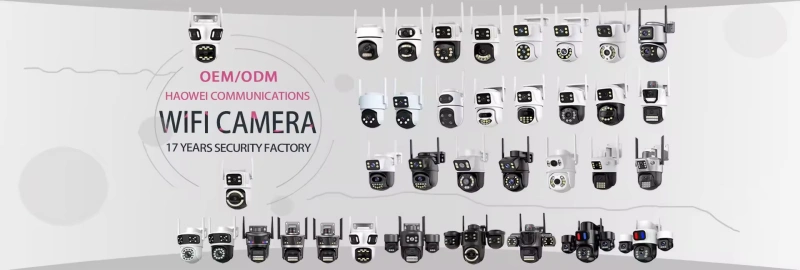
Haowei’s catalog centers on CCTV, WiFi/4G network, IP, and solar cameras, plus NVR recorders. It shows up frequently in third-party supplier comparisons as a durability-focused option, with weatherproofing and dual-band WiFi connectivity called out for outdoor installs.
- Pros: Fast sample turnaround, commonly cited around 5–7 days, and low MOQs — some listings start at a single piece — make it easy to test quality before a bulk order.
- Cons: With the catalog positioned around durability and price, buyers wanting cutting-edge features like AI detection or long zoom may find fewer advanced options than at R&D-heavy competitors.
What buyers should know: A practical choice if reliable outdoor performance and fast sampling matter more to you than premium features. Ask specifically about IP66/IP67 waterproof ratings and dual-band WiFi specs, since these vary by model within the same catalog.
10. Shenzhen Weisitai Technology Co., Ltd.
Weisitai is one of the more directly relevant names on this list — its storefront sells cameras explicitly branded “ICSEE,” including 2MP and 3MP indoor/outdoor models, PTZ cameras, and solar dome cameras. The factory has been onsite-verified by SGS, a third-party inspection body.
- Pros: SGS onsite verification adds documented credibility; explicit ICSEE branding on its own listings points to tested compatibility rather than aftermarket firmware; MOQs as low as one box on several models.
- Cons: Prices span a wide range across the catalog (roughly $11–$33 per unit depending on the listing), so confirm exactly which spec tier a quote refers to before comparing it to other suppliers.
What buyers should know: Because its listings already use the iCSee name directly, this is a reasonable starting point if you want confirmed app compatibility without negotiating firmware licensing separately — but still get the SDK/app licensing terms in writing before ordering in bulk.
How Do You Verify an iCSee Camera Manufacturer Is Legitimate?
Verifying a manufacturer takes more than checking their website has a nice logo. Ask for these before wiring any money:
- Business license and export license, which you can cross-check against China’s National Enterprise Credit Information Publicity System.
- Product certifications like CE, FCC, and ROHS — request the actual certificate PDF, not just a badge on the site.
- A factory video call or virtual tour, which most legitimate manufacturers agree to without pushback.
- References from past B2B clients, ideally in your own region or a similar market.
- A sample order before committing to bulk quantities.
If a supplier resists all five, that’s a red flag worth taking seriously — legitimate manufacturers are used to buyers asking exactly these questions, and it’s worth cross-checking what you’re told against how iCSee itself handles camera security and data privacy.
Which Camera Types Do These Manufacturers Actually Produce?
Most manufacturers on this list don’t build just one camera type — they cover a range, but each tends to have a specialty. Solar-powered units, 4G cellular cameras, PTZ models, and baby monitors make up the bulk of what iCSee-compatible factories produce.
Solar cameras get requested most often by buyers in outdoor or rural markets, since they skip the need for wired power entirely. 4G models solve a different problem — locations with no WiFi access at all, like remote farms or construction sites. If your target market is mostly urban home security sellers, a supplier offering iCSee camera app customization for language and UI will matter more than solar options.
What Should You Ask Before Placing a Bulk Order?
Before you commit to a iCSee camera manufacturer, a short supplier questionnaire saves you from expensive surprises later.
| Question | Why It Matters |
|---|---|
| What’s your MOQ for custom logo or packaging? | Reveals whether they support small or mid-size B2B orders |
| Can you provide a sample within 7–10 days? | Fast sample turnaround signals in-house production, not outsourcing |
| What certifications come standard vs. optional? | Some certifications cost extra and aren’t included by default |
| Do you offer app language and UI customization? | Critical if you’re selling in a non-English-speaking market |
| What’s your warranty period and defect return policy? | A one-year warranty is standard; anything shorter is worth questioning |
iCSee camera Manufacturers who answer these clearly and quickly, without needing three follow-up emails, are usually the ones set up for serious B2B partnerships rather than one-off small orders.
Why Does Manufacturing Location Inside China Matter?
All ten iCSee camera manufacturers above are based in Shenzhen, and that’s not a coincidence. The city has dense supply chains for camera sensors, lenses, and PCB components, so factories there can source parts locally instead of waiting weeks for imports.
A factory based in Shenzhen generally has shorter lead times and lower part costs than one operating farther from the supply chain, since local sourcing cuts down on both shipping delays and markup from middlemen. If a supplier is based outside this region, it’s worth asking directly how they source components — the answer tells you a lot about their pricing and delivery reliability.
Frequently Asked Questions About iCSee Camera Manufacturers
Can any manufacturer make an iCSee-compatible camera?
Not exactly. A manufacturer needs to license or integrate the iCSee app’s SDK into their camera firmware, which requires a formal partnership process. That’s why the pool of genuine iCSee camera manufacturers is smaller than the number of companies claiming to offer “iCSee cameras” online.
Does a lower price always mean lower quality?
Not always, but it’s worth investigating why the price is low. Some iCSee camera manufacturers cut costs through volume production and efficient supply chains, while others cut corners on certifications or use lower-grade sensors. Ask for the exact certifications and sample the product before assuming either way.
What happens if I order from a reseller instead of the actual manufacturer?
You’ll likely pay a markup for the same hardware, and you won’t have direct access to customization options like packaging, logo, or firmware changes. Resellers also can’t usually resolve production-level defects as quickly, since they have to relay the issue back to the factory themselves.
How long does it take to get a custom-branded sample from these iCSee camera manufacturers?
Established manufacturers with in-house production typically deliver samples within 7 to 10 days. If a supplier quotes three weeks or more for a basic sample, they may be outsourcing production rather than manufacturing in-house.
Do these manufacturers only make cameras for the iCSee app?
No, most support multiple apps, including V380, Ubox, and Tuya, and can configure the same hardware for whichever platform a buyer needs. This flexibility is common among mid-size and large factories serving international B2B markets.
Is it better to work directly with a factory in Shenzhen?
It depends on your order size. For bulk or custom orders, working directly with a Shenzhen-based factory usually means better pricing and faster communication. For small trial orders, a trading company might be easier to manage, though you’ll pay a bit more per unit.
For further reading on verifying Chinese suppliers before international trade, the U.S. International Trade Administration’s guidance on doing business in China is a solid starting point.